Between 1990 and 2015, the vaccination of babies and children against Hepatitis B prevented 310 million global cases of chronic hepatitis. So far this century, vaccination of newborns and infants has prevented 22 million deaths; one death per 13 vaccinations. Because death from hepatitis often occurs decades after vaccination, this effort is also believed to have prevented another 16 million deaths that would otherwise have occurred this decade.
Before we had the Hep B vaccine, about 9,000 American kids were infected via maternal transmission every year, and another 9,000 were infected via unknown sources. As many as 70-90% of babies who are exposed to HBV will get infected; 90% of those will develop chronic hepatitis, and 1 in 4 of those people will die prematurely.
This month’s ACIP meetings were disastrous for hepatitis B prevention in the United States. Much has been written in the past week about the CDC’s resulting new vaccine guidance for infants; about why it matters; and about blue states’ rush to reaffirm their own pro-vaccine stance.
But little-to-nothing has been said about how the new CDC guidance will actually increase HBV risk in the US. The CDC’s ACIP guidance doesn’t actually make Hepatitis B vaccines physically unobtainable, and insurance is still covering them. Even Medicaid CHIP programs, which serve low-income kids, will cover the shots for parents who want them and have a provider’s approval – at least, for now.
So why do the ACIP recommendations even matter? Much of what I’ve read about their meeting says “this is very bad,” but then concludes “but get your baby vaxxed anyway,” suggesting that the threat posed by the new ACIP guidance isn’t really so great after all. At least, that’s the message Kennedy’s HHS has been sending (“we aren’t actually stopping anyone”) and I think that’s the message most pro-vax readers have gotten: that the new guidance won’t hurt them, because regardless of how high infection rates go in the US, they’ll be covered – because they aren’t, ya’ know, dumb anti-vaxxers.
But this assumption almost certainly reflects a huge helping of hubris. Even though practical obstacles to Hep B vaccine access haven’t hit us at the community level yet (though they likely will; Kennedy’s anti-vaxxers are still in the “laying groundwork” stage), there are plenty of psychological issues at play that will increase the risk of babies going unvaxxed right away, and within many families, not just among “those people.”
What is the Actual Government Guidance on Hep B Vaccination?
First, let’s quickly review what the guidance was and how it’s changed.
When the Hepatitis B vaccine first came out in the early 1980s, it was recommended only for high risk groups, including folks like intravenous drug users, men who have sex with men, and many healthcare workers. In 1988, more high-risk groups were added to the recommendation to get vaxxed. But in 1991, the CDC began recommending vaccination for all newborns starting either at birth (in the hospital), or by one or two months of age, because focusing on “high risk groups” rather than on the population writ large just wasn’t bringing down our hepatitis rates; too many folks who got HBV had no risk factors at all.
In 2002, that recommendation changed again to include every infant at birth, because epidemiologists realized that waiting until kids were a month or two old was, in many cases, too late to prevent infection. Trying to vaccinate kids in the community versus in hospital maternity units also meant too many infants were lost to follow-up, which is to say, they never got vaxxed; for an intervention to be effective, interventionists have to apply it while they’ve got the target audience right there in the room with them. It was these last, most stringent recommendations that finally did the trick: despite the fact that thousands of Americans still die from hepatitis and associated conditions yearly, new US hepatitis B infection rates have dropped dramatically: about 67% across the population as a whole, and more than 90% among kids and teens.
Despite this success story (and no evidence that the vaccine causes any harm), the CDC’s Advisory Committee on Immunization Practices has now modified CDC guidance again, to recommend that only newborns with HBV-positive or status-unknown moms be immunized as a matter of course (though other newborns could be vaxxed if parents asked and providers agreed). The ACIP also recommended this month that later doses in the Hepatitis B three-shot series be made contingent on a child’s antibody levels at those points in time, despite the fact that we don’t actually know, definitively, what antibody levels are necessary to prevent infection in babies.
Why is the New Guidance a Problem?
Officially, the new ACIP guidance doesn’t limit access to Hepatitis B vaccines – anyone who wants them for their baby should theoretically still be able to get them, at least, as long as their providers are willing. (The ideal time to ask your obstetrician and potential pediatrician about their vaccination views is before you give birth; some healthcare providers aren’t going to be willing to assume liability without federal guidance to back them up in the event of a rare adverse effect.)
But there are plenty of practical problems. These include the facts that pregnant women are usually screened for HBV in the first trimester, leaving plenty of time for them to become infected later on in pregnancy; that, despite universal screening recommendations, about 16% of pregnant women in the US are never screened at all due largely to healthcare disparities; and that screening in hospital OB units (never mind all the MAHA folks giving birth at home) will miss the window of opportunity to vaccinate some newborns of HBV-positive moms, which is just within the twelve hours after birth, according to the CDC.
The new guidance also ignores the fact that babies can easily get infected by exposure to other people besides their mothers; that’s why risk-based vaccination recommendations based on maternal serostatus didn’t work the first time we tried them. And making people come back to a pediatrician’s office or healthcare center for a vaccine after an initial appointment for an antibody test means a lot of babies will never get vaxxed, because that extra first appointment involves extra time, extra money, and an infant blood draw that many new parents will find distressing. There’s also a real possibility that, for families that can’t or don’t make both appointments, other vaccines that are usually given at the same time as the two-month Hep B dose (like those that protect against Hib, DTaP, polio, rotavirus and pneumonia) may also be missed.
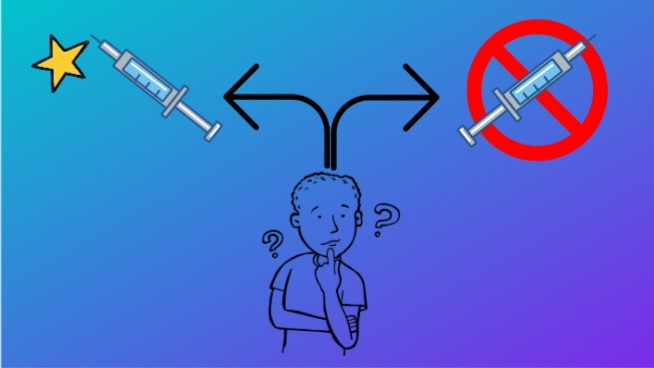
But beyond all these issues (which are bad enough), the fundamental problem with the new guidance is that it shifts the burden of decision-making to families and community providers, who will be now be forced to make vaccine choices with limited or poor information, and without the benefit of a government authority figure telling them to (and providing cover from liability if any vaccine side effects occur). That’s a huge problem, for many reasons. As we’ve all seen time and again over the past five years, “individual choice” too often means that individuals make poor choices, for a variety of reasons. Here are some of them:
Cognitive Overload
To a great many people, getting a vaccine that’s not on the childhood immunization schedule (and so, in most places, is not required by schools) is just one more thing to do. That sounds silly, but cognitive and emotional overload among parents of newborns is a big deal, as they try to absorb a lot of new information, learn many new skills, and multitask like mad, all on very little sleep. Anything they don’t need to do to keep their baby alive (and hopefully, not screaming 24/7) in those first couple of months is going to drop way down on a caregiver’s priority list.
Cognitive Biases
To make matters (much) worse, the vast majority of us are predisposed to underestimate our own and our kids’ susceptibility to the risks posed by population-level threats, and so, to recognize the necessity of action. This is likely to have a profound negative effect on any vaccination decisions that folks have to make on their own, especially if those decisions might go against federal policy. There are several cognitive biases and fallacies that make this true.
First, the availability heuristic means that people will underestimate the risk of HBV to their babies because they can’t easily think of instances in which a family didn’t vaccinate against it and then their kid got sick or died. Some of that inability to think of examples is due to the fact that (as with many previously endemic childhood diseases), we’ve done such as good job of eradication that many of us don’t “know someone” who has HBV. Some of the problem is because, even though it’s eventually often fatal (it causes almost half of all liver cancers), chronic hepatitis (like HIV/AIDS) isn’t always a disease that announces itself in its early stages – so even when we do know someone living with HBV, we may not know we do. In fact, about half the people infected with HBV in the US don’t know it, themselves.
And even when we hear of a child or adult dying of virus complications (which can take place years after infection, in the case of viruses like HBV or measles), we often don’t make a connection to the person having missed a shot. Especially with a disease like HBV, folks are often inclined, due to phenomena such as just world thinking, to blame outcomes like cirrhosis on “bad behavior” such as alcoholism, rather than on lack of access to vaccines.
Because so many people judge the significance of a health threat and the need to actively avoid it based on whether they can recall cases in which people they knew suffered, we should expect, for at least several years, that parents will underestimate the need for Hep B vaccination. Many will also greatly overestimate the risk of vaccine side-effects (that’s called the base rate fallacy), thanks to RFK’s massive disinformation campaign about autism’s causes and all the folks on social media spinning tales of how vaccines made them ill. That nonsense has often made vax risks more salient to both patients and providers than vax benefits are. Growing mistrust of the institution of healthcare, in general, means that the pro-vaccine words of pediatricians may well fall on deaf ears, because folks don’t know anyone personally affected.
Similarly, optimism bias (also called comparative optimism) is a cognitive fallacy whereby folks see themselves as more likely to experience positive events than other people do, and less likely to experience negative ones. It’s a weird human foible that people are almost always inclined to see health risks in relative, versus absolute terms – we saw that play out repeatedly during the early years of the pandemic, and it’s an issue even more today, among people who have survived repeated covid infections with no or few ongoing effects that they’re aware of. In the case of HBV, where infection has long been associated with drug use and sexual behavior (especially that of a stigmatized sort), most folks will likely be very inclined to see their own childrens’ risk of developing chronic hep as negligible. So why go through the trouble of begging for a shot at the hospital (and maybe making the healthcare workers there think you have some sketchy past behavior to hide) and then putting your two month old through a blood test? Many people won’t. Coupled with the illusion of control (a cognitive bias rampant in the MAHA movement that makes people think they’re less at risk of negative events than other people and more able to control their outcomes even in the absence of effective action), comparative optimism is likely to contribute to rising chronic HBV rates among infants and children.
Because the ACIP meeting has now politicized Hepatitis B vaccination, social influence pressures are also likely to increase vaccine hesitancy; to be good MAGA/MAHA members, folks will need to change their pro-Hep B vax beliefs, attitudes and behavior to align with those of the men running this show. Out-group bias will provide the way to do that, for the MAGA and MAHA inclined, especially those who are white and middle or upper class. This bias makes us view other groups of people as “less than,” and so, as both more susceptible to and deserving of infection. Remember the novel The Help? A big theme of that book was the Jim Crow-era perception that black Americans inherently carry more communicable diseases than whites, and so, should not be allowed to share bathrooms with white people. That “scientific racism” may not be as transparent today as it once was, but it’s still guiding people’s vaccine beliefs and behavior. MAHA Americans will shy away from the Hepatitis B vaccine to avoid seeing themselves as renegades or being seen by others as traitors to the party; out-group bias is how they’ll make it feel okay. In fact, saying no to the Hep B vaccine (as to the HPV vaccine, another shot that reduces the risk of a sexually transmitted infection) is already a likely way that MAHA folks reassure themselves they’re healthy, moral, middle or upper class people. See how clean I am? I don’t even need that shot!
The Ambiguity Effect
Perhaps the most important psychological factor likely to decrease Hepatitis B vaccine uptake among newborns and other infants is the Ambiguity Effect. This refers to the huge tendency people have, in situations where decision outcomes aren’t crystal clear, to choose a known course of action over the unknown, even if doing that is a very bad idea. Humans are creatures of habit: we don’t like ambiguity (that’s called uncertainty aversion), we don’t like adopting new or unfamiliar activities, and we really don’t like bucking the status quo. When the information we have seems incomplete, unclear or contradictory (which RFK has made every effort to make vaccination information seem), we often don’t like to commit to action, preferring to take a “wait and see” approach; that’s called decision paralysis. In real-world terms, it often translates into “wait forever,” because the safest-feeling option is whatever folks were already doing, which often means doing nothing; in the case of vaccination, that means abstaining, especially from vaccines you or your kids never had before. Even our proverbs tell us to take this approach: Act in haste, repent at leisure!
Lest you think, “The people I know aren’t like that,” I promise you: they are. As an example, I confess that, despite being an expert in health risk reduction who is squarely in the “pro-circumcision” camp (yes, I know it reduces sexual sensation, but it also reduces the risk of various STIs and penile cancer), I failed to get my newborn son circumcised immediately after birth, while we were still in the hospital. All it took to make me pause was a new OB being assigned to the procedure whom I didn’t already know, and then an anti-circumcision lactation consultant seizing on my moment of hesitation to suggest I let my pediatrician do it the next week. (I didn’t know then that he would be unwilling and would recommend we see a pediatric urologist; the lactation consultant did.) I won’t tell you whether or not my son eventually got circumcised (that’s not my outcome to reveal), but I will say that I’m still rather embarrassed, decades later, that my original firm resolve to have the procedure performed immediately was so easily shattered by one moment of unexpected ambiguity and then a suggestion to delay.
So the ambiguity effect is a big reason I tend to go on about vaccine and other health risk reduction mandates, including participation mandates like schools have. When what we know about a threat isn’t clear or certain, whether we’re required to Do the Thing provides incredibly valuable information about both the threat and our need to embrace the intervention. Seatbelt use? Mandated, and more than 90% of Americans believe it’s important. Covid shots? Not mandated, and you know as well as I what most folks think of getting boosted. Meh.
That’s why it’s so profoundly dangerous that the ACIP has changed its guidance, throwing most folks into confusion even though Hep B vaccines are still available. ACIP members know it: Retsef Levi, (an MIT mathematician whom RFK inexplicably named to the committee) called the new guidance “a fundamental change in the approach to this vaccine” that encourages families to “carefully think about whether they want to take the risk of giving another vaccine to their child.”
Even the wording of the guidance is intended to sow uncertainty, among pediatricians as well as parents. As NPR recently reported, infectious disease expert Natasha Bagdasarian of the Association of State and Territorial Health Officials stated at the ACIP meeting that “Adding excessive or ambiguous language around shared decision-making muddies the waters, creates a false sense of scientific uncertainty, and places barriers to care….Many health care providers interpret it as a sign a vaccine is controversial, or that they may be exposed to additional liabilities.” And in a December 5 statement by the American Academy of Pediatrics and 40 other leading medical/health groups, the authors noted that “The apparent goal of this meeting was to sow doubt in vaccines rather than advance sound vaccine policy.” Yeah, no kidding; it’s a very effective tactic for Kennedy’s CDC to get people to stop vaccinating their kids and patients without looking like he made them stop. But as the statement concluded, “we will all pay a price for that.” Yes, we will.
We’re at a Crossroads
At this moment, psychological obstacles to Hepatitis B vaccination of newborns and other infants are a significant concern. But greater practical obstacles are also coming. RFK and the Trump administration are promising increased HBV screening of pregnant women to compensate for withdrawing universal vaccination guidance, but we need to pay attention not to what they’ve said, but to what they’re doing. The regime has defunded Planned Parenthood, which historically was responsible for HBV testing through its STI and pregnancy care services. They’re making access to the ACA much, much harder to afford, and are throwing many millions off of Medicaid, which is responsible for the healthcare access of 40% of pregnant women in the US. Medicaid restrictions also mean that the small and rural hospitals and healthcare centers which depend on Medicaid payments to keep their doors open simply can’t – and it’s expensive pregnancy and labor & delivery services that are often lost first. All of this means that many fewer women will have access to prenatal care, including prenatal HBV screening, in the coming years.
For now, Medicaid and CHIP will still cover maternal screenings and infant Hep B vaccination, but there’s no reason to believe that commitment won’t change down the road, especially as vaccination rates, which are a proxy for public support of vaccination, drop. Despite the sensation we have that public health is simply in free-fall, Bobby Kennedy is, in fact, moving strategically and incrementally to make each step in his anti-vax playbook feel manageable to that segment of the public which still opposes him: first you make it harder for folks to do the right thing; then when people don’t do it, they tell themselves it wasn’t that important to do anyway (thanks to our old friend cognitive dissonance reduction), and then Dr. Oz over at the Centers for Medicare and Medicaid Services can stop allowing payment for the intervention without fear of outcry or reprisal; after all, no one wants it, anyway. This is a process. But as with so much that the Trump regime does, they’ll deny culpability and frame what happens next as the outcome of individual decision making; personal choice. So when HBV rates rise, as they surely will (though likely more so and sooner among low income folks with poor healthcare access), the feds will throw up their hands and say “Well, it wasn’t our fault; we never took the vaccine off the market. Some people just have disease-promoting habits.” This attitude is like Reagan’s anti-government stance on steroids: giving “power” back to people who don’t know what they should do, and then blaming them when we all get sick.
 Essays you didn't want to read